
Published Works
My published work primarily covers science communications, whether that be translating technical topics for general audiences, interviewing experts, or sharing science-informed opinions. I also publish on Substack in the creative nonfiction space and am working on two long-form stories: a literary fiction novel, and a fantasy series. Stay tuned for updates on those projects and more.
Substack Series
Creative nonfiction essay series.
Eventually, because I know that this will pass as all things do, I collect myself enough to speak in sentences. My friend is patient. My friend is kind. My friend talks to me and tethers me to planet Earth. I am here, and I am not all right. But I will be, but I will be.

Despite the death of the National Renewable Energy Lab, its legacy in Golden lives on
Opinion piece published in The Colorado Sun
"In 1977, the Solar Energy Research Institute landed in Golden. In 1991, that place turned into the National Renewable Energy Laboratory. And on Dec. 1, the Trump administration renamed it the National Laboratory of the Rockies. Although the rebrand was imposed just last month, the story of NREL, now NLR, has been changing from the inside since President Donald Trump took office, and I was there for it."

Inside the Lab & Beyond
Profile piece on Dr. William Tarpeh published with The Water Research Foundation.
"A rare few people end up in the career they decided for themselves as children. More often, the question 'What do you want to be when you grow up?' yields an answer upon which most of us look back with a smile, a laugh, a shake of the head. We make plans and find ourselves, years later, doing something entirely different from what our younger selves imagined. Dr. William Tarpeh, Assistant Professor of Chemical Engineering at Stanford University and head of the Tarpeh Lab, is no different."

Happy Anniversary, Arctic National Wildlife Refuge
Article published with Environment America.
"Few places on the planet have experienced less humanity than the Arctic National Wildlife Refuge. There are no roads or official campgrounds within the refuge’s borders. The Gwich’in people have stewarded this sacred land with great care for thousands of years, leaving small footprints. Herds of caribou ford its rivers; eagles bank above its plains; polar bears, foxes, porcupines and more than 200 species of migratory birds thrive in this frosty sanctuary above the Arctic Circle."

Meet Big Lonely Doug
Article published with Environment America.
"Where once there stood a family of towering, mighty trees, one solitary giant pierces the sky, surrounded by land, cut clean. You can imagine the chorus of chainsaws, followed by the quake of the Earth, as centuries-old behemoths found the ground, one after another, after another, after another. Surrounded by devastation, this lone survivor stands tall—his green foliage a beacon of life shining amid a barren landscape. Meet Big Lonely Doug."

It's in My Nature
Profile piece on Dr. Amy Pruden published with The Water Research Foundation.
"Dr. Pruden recognized the value of water from a young age. In a July 2023 interview with The Water Research Foundation, she reminisced about growing up near a lake. Exploring the ecosystem, she quickly learned that water is essential for life—not just for humans but for 'all the little creatures in the water' as well."
Keeping Our Finger on the Pulse of Water
Article published with The Water Research Foundation.
"Technology and research continue to develop at an unprecedented rate. Keeping on the cutting edge has never been more important for The Water Research Foundation. Thanks to the dedication of our volunteers and staff and careful strategic planning, we are more equipped than ever to balance on that well-sharpened blade."

Meet the Sourlands: Yes—New Jersey has Forests
Article published with Environment America.
"The backyard of my childhood home is a sea of trees. Their branches rustle in the wind as summer storms hydrate our rocky, yet rich, mountain soil. It’s in that very soil that our garden grows—plentiful and colorful. Sweet peas, bell peppers, basil, rosemary, beets, onions, carrots, eggplant … an oasis of life between the tightly woven trees of Central New Jersey."
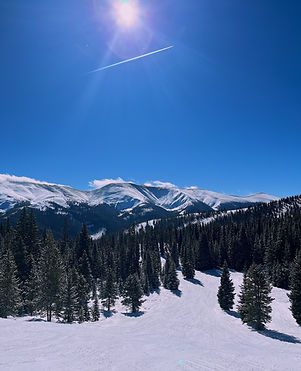
Clean Air for Colorado Starts in the Arctic
Op-Ed published in Boulder Daily Camera.
"The Northern Front Range—including Boulder County—broke the record for the number of ozone action alerts in a single season. And on Aug. 7, Denver was granted the unfortunate distinction of having the worst air pollution in the world. Despite the threat to public and environmental health, we continue to drill for the very oil polluting our air. Not only that, but we are also willing to do so in our nation's most pristine wilderness."
The Delaware Water Gap: Gem of the Northeast
Article published with Environment America.
"Visit in the spring or summer, and you’ll find a sea of green interspersed with the snaking, blue Delaware River. In the winter, enjoy a landscape of snow-dusted oaks and maples and shimmering, icy waters. With autumn comes an explosion of color; mountain ridges blanketed in every shade of red, orange and yellow rustle in a crisp breeze."

What Makes Older Forests So Special?
Article published with Environment America.
"Leaving older forests to their own devices means safeguarding vital wildlife habitats and healthy ecosystems that fortify our planet’s overall climate stability. If that isn’t reason enough to keep our remaining big trees standing, then perhaps this will tip the scale: Old-growth forests store vast amounts of carbon."

Mother Nature Knows Best: Progress Post-Pandemic
Essay published in Minding Nature and accompanying poem.
"The systemic racism built into the very roots of our nation has grown and blossomed into a society that idolizes the rich, famous, and powerful while demonizing the poor and powerless, a group that (not coincidentally) encompasses a large portion of the racial, ethnic, and sexual minorities in the United States."

If You Stand for the Grand Canyon, Stand for the Arctic
Article published with Environment America, co-authored.
"You can find Arizonans hunting and fishing in various national wildlife refuges such as Cabeza Prieta, Cibola and Havasu. Individually, they are safe spaces for all — humans and wildlife alike. Together, they make up a greater system of national wildlife refuges that should be valued — and protected — by all of us."

Meet the Monuments: Berryessa Snow Mountain
Article published with Environment America, co-authored.
"Amid the beauty and life of Condor Ridge also stand cultural sites for Indigenous tribes, primarily the Yocha Dehe Wintun Nation. These land’s historical inhabitants have conducted trade and traveled through Molok Luyuk, the name for Condor Ridge provided by the Yocha Dehe Wintun, for centuries."

